
Is God Male and Female?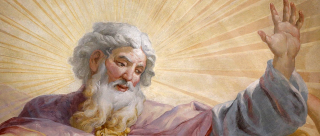
I was recently on my computer when I saw a question appear on a news feed and it was asking if it was okay to refer to God as a female? I was reading the comments and I could see that there was a lot of confusion around this topic. Most of the people commenting were Christians and some were saying that God is Spirit and spirits have no gender whilst others were saying God is both the Father and the Son so must be male, whilst others were saying that Scripture recognises Him as a mother so He must be both mother and father, making Him male and female.
What does the Bible say?
So God created man in his own image, in the image of God created he him; male and female created he them (Genesis 1:27, KJV). This Scripture shows us that God created mankind in His own image, first the male and then the female. Does this mean God is male and female if both are created in His image? Many believe this to be so because of their interpretation of this passage. To get a better perspective what does the word image actually mean in Hebrew in this passage?
Image (Strong's #6754)
The word צלם (tselem) is literally a shadow which is the outline or representation of the original.
Mankind (which is male and female) were created in the shadow/outline of God. This means the blueprint of men and women being created by God in His image was a representation of the original. This means the invisible form of God is shaped like a human. In whom we have redemption through his blood, even the forgiveness of sins: Who is the image of the invisible God, the firstborn of every creature: For by him were all things created, that are in heaven, and that are in earth, visible and invisible, whether they be thrones, or dominions, or principalities, or powers: all things were created by him, and for him: And he is before all things, and by him all things consist (Colossians 1:14-17, KJV). We see that Jesus is the visible image of the invisible God and Jesus was a male human being. Jesus as the word of God always existed in Heaven as God and was the firstborn over all His creation. This means that Jesus has pre-eminence over all creation and that He Himself is not a created being as He Himself is the creator. Later, Jesus as the word of God became flesh through an immaculate conception and dwelt amongst us (John 1:14). When God formed mankind, He started with the male (Adam) and then decided he needed a companion and formed the female (Eve) from man's rib. This means that God’s creation is either male or female and created from a representation of the original design of God Himself – meaning the form and shape. Scripture also shows us that God is a three part being. Man is also a three part being (spirit, soul and body). Scripture shows us that Jesus the Son is male.
What about the Father and the Holy Spirit?
A lot of people get confused when we talk about God as Father and the Holy Spirit as He. Does that mean God is male? God the Father and the Holy Spirit are Spirit and have no physical body, so they are not male in a biological sense. Jesus the Son, however, became fully human as a male.
Male in English is primarily biological, referring to physical characteristics like reproductive organs. That’s why Scripture never calls God “male” in a biological sense. In modern English, people sometimes use “male” to describe gender identity, but that is a human cultural meaning, not how the Bible uses it.
So when we say God is Father or the Holy Spirit is He, we are speaking about who He is as a personal, relational being, not assigning Him a biological sex.
Personhood means being a real, conscious, relational being who can love, think, choose, act, and guide. Masculine words like Father, He, or Him help us relate to Him as a real, personal being, showing His authority, care and role in our lives.
The Holy Spirit is the same. He is called He/Him (Parakletos) to show that He is a personal, conscious helper not an impersonal force. Nevertheless I tell you the truth; It is expedient for you that I go away: for if I go not away, the Comforter will not come unto you; but if I depart, I will send him unto you. And when he is come, he will reprove the world of sin, and of righteousness, and of judgment: Of sin, because they believe not on me; Of righteousness, because I go to my Father, and ye see me no more; Of judgment, because the prince of this world is judged. I have yet many things to say unto you, but ye cannot bear them now. Howbeit when he, the Spirit of truth, is come, he will guide you into all truth: for he shall not speak of himself; but whatsoever he shall hear, that shall he speak: and he will shew you things to come. He shall glorify me: for he shall receive of mine, and shall shew it unto you. All things that the Father hath are mine: therefore said I, that he shall take of mine, and shall shew it unto you (John 16:7-15, KJV).
What about Female?
Or do you not know that the unrighteous will not inherit the kingdom of God? Do not be deceived; neither fornicators, nor idolaters, nor adulterers, nor effeminate, nor homosexuals, nor thieves, nor the covetous, nor drunkards, nor revilers, nor swindlers, will inherit the kingdom of God (1 Corinthians 6:9-10, KJV). In this passage the Bible uses the word effeminate as a sin. The word effeminate in Greek is Malakia translated as "softness", "weakliness" that, in relation to men, has sometimes been translated as "effeminacy".
Effeminacy is the manifestation of traits in a boy or man that are more often associated with feminine behavior, mannerism, style, or gender roles rather than with traditionally masculine behavior, mannerisms, style or roles. God created men and women opposite to one another. There is one God but three depictions of His character – Father, Son and Holy Spirit, which is seen in both man and woman. This is where so much confusion comes in. Many men display the fruits of the spirit gentleness, love, humility and compassion. Society can label them as feminine. It is not femininity but gentle loving caring fruits of the spirit. Many men reject these fruits as they don't want to be seen as feminine, or weak which in turn reject the characteristics of God. Men should be able to operate in these qualities and not be labelled feminine. Woman can take on the role of self-sufficiency, not wanting to be seen as a weaker vessel to the man so in turn can reject their femininity. Put simply men are made masculine, woman are made feminine. This is how God made us. Men should not refer to them self as feminine, just as woman should not refer to themselves as masculine, but we should all be able to operate in all of the fruits of the Spirit without fear of labels. We need to embrace the qualities and attributes that pertain to both genders that God has ordained for us. This is femininity in woman, masculinity in men, and the fruits of the Holy Spirit operating in both.
What about those who believe it is okay to refer to God as a mother? O Jerusalem, Jerusalem, thou that killest the prophets, and stonest them which are sent unto thee, how often would I have gathered thy children together, even as a hen gathereth her chickens under her wings, and ye would not! (Matthew 23:37, KJV).
As one whom his mother comforteth, so will I comfort you; and ye shall be comforted in Jerusalem (Isaiah 66:13, KJV).
Of the Rock that begat thee thou art unmindful, and hast forgotten God that formed thee (Deuteronomy 32:18, KJV).
I have long time holden my peace; I have been still, and refrained myself: now will I cry like a travailing woman; I will destroy and devour at once (Isaiah 42:14, KJV).
Scripture shows us that He is nurturing and has motherly instincts toward us but He never refers to Himself as our mother or a female, but is instead likening Himself to a mother. When you really delve into the truth of the Scriptures you can see that calling God a woman, a mother, a sister or a female is heresy.
God is fully personal, fully real, and fully Spirit. Masculine pronouns and the title Father reflect how we relate to Him, not His biology. The Holy Spirit is a personal He as well, and the Son became male in His human incarnation.
Although Father God is not male in the human, physical sense - the Bible always refers to Him with masculine pronouns and titles because that's how He wants to be known. This emphasis on Fatherhood and masculinity is central to how Scripture portrays the relationship between God and His people.
By Tania Francis